by PushtoLearn
Como usar o verbo modal MUST em inglês?
Verbo modal Must – Exercícios
Estes exercícios focam em Must
O que é Must?
"Must" é um verbo modal usado para:
|
Uso |
|
Mostrar necessidade ou obrigação |
|
Expressar proibição (em formas negativas) |
|
Indicar forte certeza |
Como todos os verbos modais, "must" é seguido pela forma base do verbo principal.
Usos de Must
1. Necessidade ou obrigação
Use "must" para falar sobre algo que é necessário ou obrigatório.
Exemplos:
-
You must wear a seatbelt in the car.
-
Students must complete their homework on time.
2. Proibição
Em frases negativas, "must not" (ou "mustn’t") é usado para expressar algo que é proibido.
Exemplos:
-
You mustn’t smoke in the hospital.
-
We mustn’t enter this area without permission.
3. Forte certeza
Use "must" para expressar uma forte crença ou conclusão baseada em evidências.
Exemplos:
-
He must be the new teacher; he’s sitting at the teacher’s desk.
-
You must be tired after such a long journey.
Regras para usar Must
-
"Must" é sempre seguido pela forma base do verbo (sem "to").
Correct: You must finish the report today.
Incorrect: You must to finish the report today.
-
A forma negativa é "must not" ou "mustn’t."
Correct: You mustn’t use your phone in class.
Incorrect: You don’t must use your phone in class.
-
"Must" não muda com o sujeito.
Correct: She must study. / They must study.
Incorrect: She musts study.
Erros comuns com Must
|
Erro |
Por que está errado |
Forma correta |
|
You must to listen to me. |
"To" não é necessário após "must." |
You must listen to me. |
|
He musts finish the work. |
"Must" não leva "s." |
He must finish the work. |
|
We don’t must be late. |
Use "mustn’t" em vez de "don’t must." |
We mustn’t be late. |
|
Must you to leave early? |
"To" não é necessário em perguntas. |
Must you leave early? |
Uso cotidiano de Must
|
Situação |
Frase de exemplo |
|
Falar sobre regras |
You must show your ID at the door. |
|
Proibir algo |
You mustn’t park here; it’s illegal. |
|
Expressar certeza |
She must be excited about her promotion. |
|
Dar conselho formalmente |
You must visit the museum; it’s amazing! |
Diferença entre Must e verbos modais semelhantes
|
Verbo modal |
Uso |
Exemplo |
|
Must |
Forte necessidade ou certeza |
You must stop at the red light. |
|
Have to |
Necessidade (mais comum na conversação) |
You have to wear a uniform. |
|
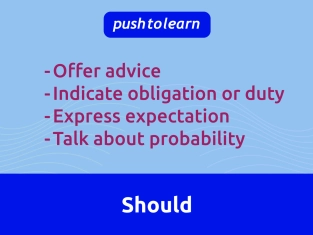
Should |
Sugestão ou conselho |
You should exercise more. |