by PushtoLearn
Verbi modali in inglese: uso ed esercizi
Verbi modali – Esercizi
Questi esercizi si concentrano sui verbi modali
Elenco dei verbi modali più comuni
|
Verbo modale |
Usi |
Examples |
|
Can |
capacità, possibilità, permesso |
"I can swim." / "You can borrow my book." |
|
Could |
capacità passata, richieste educate, possibilità |
"She could run fast." / "Could you help me?" |
|
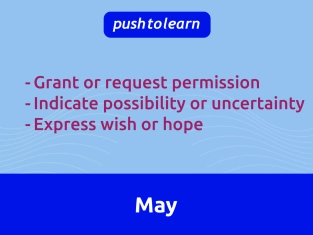
May |
permesso, possibilità |
"You may leave early." / "It may rain." |
|
Might |
possibilità (meno certa di “may”) |
"We might go to the park later." |
|
Shall |
suggerimenti, intenzione futura (formale) |
"Shall we go out?" / "I shall return soon." |
|
Should |
consiglio, obbligo, aspettativa |
"You should study for the test." |
|
Will |
intenzione futura, promesse, certezza |
"I will call you tomorrow." |
|
Would |
cortesia, situazioni ipotetiche |
"I would like some tea." / "If I were rich, I would travel." |
|
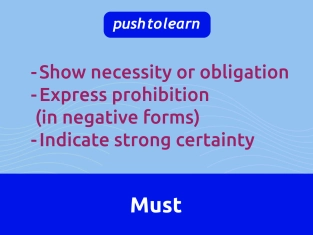
Must |
necessità, forte obbligo, deduzione |
"You must wear a seatbelt." / "He must be tired." |
|
Ought to |
consiglio, aspettativa |
"You ought to apologize." |
Caratteristiche dei verbi modali
|
Caratteristica |
Spiegazione |
Example |
|
Niente infinito o forme in -ing |
I verbi modali non hanno infinito, passato o participio. |
Incorrect: "I canned do it." / Correct: "I can do it." |
|
Seguiti dalla forma base |
I modali sono sempre seguiti dalla forma base del verbo (senza “to”). |
"You should study." (Not "should to study") |
|
Nessuna -s alla 3ª persona singolare |
A differenza dei verbi regolari, i modali non prendono -s alla 3ª persona singolare. |
"He can swim." (Not "He cans swim") |
Usi dei verbi modali con esempi
|
Verbo modale |
Uso |
Example |
|
Can |
capacità |
"She can play the piano." |
|
permesso |
"You can use my laptop." |
|
|
possibilità |
"It can be very cold in January." |
|
|
Could |
capacità passata |
"When I was younger, I could run faster." |
|
richiesta educata |
"Could you help me with this?" |
|
|
possibilità |
"It could rain later." |
|
|
May |
permesso |
"You may take a break now." |
|
possibilità |
"It may snow tomorrow." |
|
|
Might |
possibilità |
"We might go to the beach if the weather improves." |
|
Shall |
suggerimenti |
"Shall we have dinner now?" |
|
intenzioni formali |
"I shall see to it that your request is fulfilled." |
|
|
Should |
consiglio |
"You should eat more vegetables." |
|
aspettativa |
"He should arrive by 6 p.m." |
|
|
Will |
intenzione futura |
"I will call you tomorrow." |
|
promesse |
"We will never forget this day." |
|
|
Would |
cortesia |
"Would you like some tea?" |
|
situazioni ipotetiche |
"If I were you, I would apologize." |
|
|
Must |
necessità |
"You must wear a helmet." |
|
deduzione |
"He must be the new teacher." |
|
|
Ought to |
consiglio |
"You ought to see a doctor." |
|
aspettativa |
"The train ought to arrive soon." |