by PushtoLearn
Verneinung im Englischen - Überblick mit Beispielen
Inhaltsverzeichnis
Übungen zu negativen Sätzen
Diese Übungen konzentrieren sich auf negative Sätze.
Wie man negative Sätze bildet
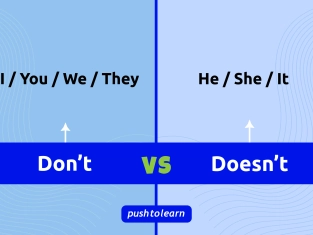
Die Struktur eines negativen Satzes hängt von der Zeitform ab. Die häufigste Art, einen Satz zu verneinen, ist die Verwendung von not mit einem Hilfsverb.
|
Zeitform |
Positiver Satz |
Negativer Satz |
|
Present Simple (do/does) |
I like coffee. |
I do not (don’t) like coffee. |
|
She likes tea. |
She does not (doesn’t) like tea. |
|
|
Past Simple (did) |
They visited Paris. |
They did not (didn’t) visit Paris. |
|
Present Continuous (am/is/are + -ing) |
She is reading. |
She is not (isn’t) reading. |
|
Past Continuous (was/were + -ing) |
We were watching TV. |
We were not (weren’t) watching TV. |
|
Present Perfect (have/has + past participle) |
He has seen the movie. |
He has not (hasn’t) seen the movie. |
|
Future (will) |
She will call you. |
She will not (won’t) call you. |
Negative Sätze mit verschiedenen Verbarten
1. Negative Sätze mit „be“ (am, is, are, was, were)
- He is not at home. (NOT He doesn’t be at home.)
- They were not late. (NOT They didn’t be late.)
2. Negative Sätze mit Vollverben (do, does, did)
- She does not (doesn’t) like ice cream.
- We did not (didn’t) go to the party.
3. Negative Sätze mit Modalverben (can, could, must, should usw.)
- You cannot (can’t) park here.
- He should not (shouldn’t) be rude.
4. Negative Sätze mit „have“
- She does not have a car. (Present Simple)
- He has not had lunch yet. (Present Perfect)
Negative Sätze in verschiedenen Zeitformen
|
Zeitform |
Positiver Satz |
Negativer Satz |
|
Present Simple |
She speaks French. |
She does not (doesn’t) speak French. |
|
Past Simple |
I ate breakfast. |
I did not (didn’t) eat breakfast. |
|
Future Simple |
They will help us. |
They will not (won’t) help us. |
|
Present Continuous |
He is running. |
He is not (isn’t) running. |
|
Past Continuous |
We were sleeping. |
We were not (weren’t) sleeping. |
|
Present Perfect |
She has finished. |
She has not (hasn’t) finished. |
|
Past Perfect |
They had left. |
They had not (hadn’t) left. |
|
Future Perfect |
She will have arrived. |
She will not have arrived. |
Negative Sätze mit Indefinitpronomen
In negativen Sätzen verwendet man no--Wörter statt any--Wörter:
|
Richtig |
Falsch |
|
Nobody came. |
Anybody didn’t come. |
|
Nothing happened. |
Anything didn’t happen. |
Beispiele:
No one was at home. (NOT Anyone wasn’t at home.)
Nothing is ready yet.
Häufige Fehler bei negativen Sätzen
|
Falsch |
Richtig |
Warum? |
|
He don’t like pizza. |
He doesn’t like pizza. |
Mit he/she/it verwendet man „does not (doesn’t)“. |
|
She didn’t went home. |
She didn’t go home. |
„Did“ zeigt bereits die Vergangenheit an, daher bleibt das Verb in der Grundform. |
|
I no have a car. |
I do not have a car. |
Für Verneinungen im Präsens verwendet man „do not“. |
|
She isn’t like football. |
She does not like football. |
„Is“ wird nicht mit Vollverben verwendet. |
Beispiele für negative Sätze im Alltag
1. Alltägliche Gespräche
- I don’t understand this question.
- She isn’t feeling well today.
- They haven’t finished their homework yet.
2. Über Regeln sprechen
- You can’t park here.
- You must not smoke inside the building.
3. Vorlieben ausdrücken
- I don’t like spicy food.
- He doesn’t enjoy horror movies.
4. Pläne machen
- We won’t go to the party.
- She isn’t coming with us.