by PushtoLearn
Przeczenia w języku angielskim
Ćwiczenia – Zdania przeczące
Te ćwiczenia koncentrują się na zdaniach przeczących.
Jak tworzyć zdania przeczące
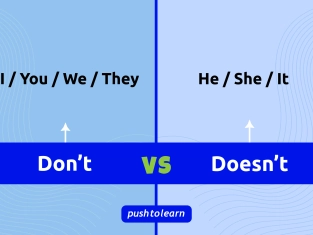
Struktura zdania przeczącego zależy od czasu gramatycznego. Najczęstszym sposobem tworzenia przeczeń jest użycie not z czasownikiem pomocniczym.
|
Czas |
Zdanie twierdzące |
Zdanie przeczące |
|
Present Simple (do/does) |
I like coffee. |
I do not (don’t) like coffee. |
|
She likes tea. |
She does not (doesn’t) like tea. |
|
|
Past Simple (did) |
They visited Paris. |
They did not (didn’t) visit Paris. |
|
Present Continuous (am/is/are + -ing) |
She is reading. |
She is not (isn’t) reading. |
|
Past Continuous (was/were + -ing) |
We were watching TV. |
We were not (weren’t) watching TV. |
|
Present Perfect (have/has + past participle) |
He has seen the movie. |
He has not (hasn’t) seen the movie. |
|
Future (will) |
She will call you. |
She will not (won’t) call you. |
Zdania przeczące z różnymi typami czasowników
1. Zdania przeczące z czasownikiem „be” (am, is, are, was, were)
-
He is not at home. (NOT He doesn’t be at home.)
-
They were not late. (NOT They didn’t be late.)
2. Zdania przeczące z czasownikami czynności (do, does, did)
-
She does not (doesn’t) like ice cream.
-
We did not (didn’t) go to the party.
3. Zdania przeczące z czasownikami modalnymi (can, could, must, should, itp.)
-
You cannot (can’t) park here.
-
He should not (shouldn’t) be rude.
4. Zdania przeczące z „have”
-
She does not have a car. (Present Simple)
-
He has not had lunch yet. (Present Perfect)
Zdania przeczące w różnych czasach
|
Czas |
Zdanie twierdzące |
Zdanie przeczące |
|
Present Simple |
She speaks French. |
She does not (doesn’t) speak French. |
|
Past Simple |
I ate breakfast. |
I did not (didn’t) eat breakfast. |
|
Future Simple |
They will help us. |
They will not (won’t) help us. |
|
Present Continuous |
He is running. |
He is not (isn’t) running. |
|
Past Continuous |
We were sleeping. |
We were not (weren’t) sleeping. |
|
Present Perfect |
She has finished. |
She has not (hasn’t) finished. |
|
Past Perfect |
They had left. |
They had not (hadn’t) left. |
|
Future Perfect |
She will have arrived. |
She will not have arrived. |
Zdania przeczące z zaimkami nieokreślonymi
W zdaniach przeczących używaj wyrazów z no- zamiast form z any-:
|
Poprawnie |
Niepoprawnie |
|
Nobody came. |
Anybody didn’t come. |
|
Nothing happened. |
Anything didn’t happen. |
Przykłady:
-
No one was at home. (NOT Anyone wasn’t at home.)
-
Nothing is ready yet.
Najczęstsze błędy w zdaniach przeczących
|
Niepoprawnie |
Poprawnie |
Dlaczego? |
|
He don’t like pizza. |
He doesn’t like pizza. |
Z he/she/it używamy „does not (doesn’t)”. |
|
She didn’t went home. |
She didn’t go home. |
„Did” już wskazuje na przeszłość, więc czasownik zostaje w formie podstawowej. |
|
I no have a car. |
I do not have a car. |
Do przeczeń w czasie teraźniejszym używamy „do not”. |
|
She isn’t like football. |
She does not like football. |
„Is” nie łączy się z czasownikami czynności. |
Przykłady zdań przeczących w codziennym użyciu
1. Codzienne rozmowy
-
I don’t understand this question.
-
She isn’t feeling well today.
-
They haven’t finished their homework yet.
2. Mówienie o zasadach
-
You can’t park here.
-
You must not smoke inside the building.
3. Wyrażanie preferencji
-
I don’t like spicy food.
-
He doesn’t enjoy horror movies.
4. Robienie planów
-
We won’t go to the party.
-
She isn’t coming with us.