by PushtoLearn
Present Simple em inglês
Índice
Exercícios
Formas
Afirmativa (Frases Positivas)
Use o verbo na forma base (work, play, read).
Adicione -s / -es com he, she, it.
I drink tea in the morning.
They live near the park.
He reads before bed.
She goes to the gym.
It rains a lot here in April.
Frases Negativas
Use do not (don’t) com I, you, we, they.
Use does not (doesn’t) com he, she, it.
O verbo principal volta para a forma base.
I don’t watch TV at lunch.
We don’t drive to work.
He doesn’t eat sugar.
She doesn’t speak Korean.
It doesn’t look safe.
Perguntas
Coloque do ou does no início.
Depois, adicione o sujeito e o verbo na forma base.
Do you study online?
Do they open at 9?
Does he work on Saturdays?
Does she like jazz?
Perguntas Wh- (com palavras interrogativas):
Where do you live?
Why do they meet here?
When does he start?
What music does she play?
Regras de ortografia na terceira pessoa
Quando o sujeito é he, she, it, os verbos mudam:
Adicionar -s: read – reads, play – plays
Adicionar -es após ch, sh, ss, x, o: watch – watches, go – goes
Mudar y → ies após consoante: study – studies
Irregular: have – has
Verbo especial: to be
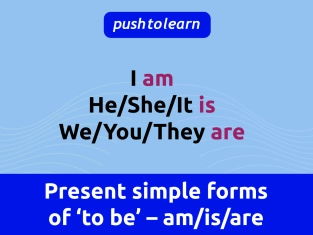
Be é diferente – não usa do/does. I am, You are, He/She/It is, We/They are
Negativas: am not, isn’t, aren’t
Perguntas: coloque o verbo no início (Am I…? Is she…? Are they…?)
Exemplos:
I’m ready. / I’m not ready. / Are you ready?
She’s a nurse. / She isn’t a nurse. / Is she a nurse?
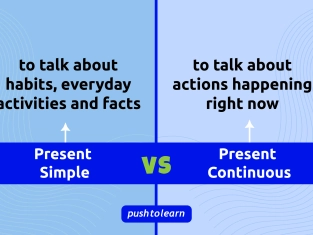
Quando usamos o Present Simple
Hábitos e rotinas (coisas que você faz com frequência):
I wake up at six. She takes the bus.
Fatos e verdades (sempre verdadeiros):
Water boils at 100°C. The sun rises in the east.
Horários e agendas (tempos fixos):
The museum opens at 10. The train leaves at 7:30.
Instruções (passos, receitas):
Add salt, then stir. Press “Submit” to finish.
Comentários e manchetes de notícias:
Striker scores again! Mayor announces new plan.
Estados (sentimentos, opiniões, necessidades):
I believe you. She prefers tea. They need help.
Expressões de tempo
Palavras comuns com o Present Simple:
always, usually, often, sometimes, rarely, never
every day / week / year
on Mondays / on Sundays
twice a week, three times a month
at weekends
Exemplos:
She usually studies in the evening.
We play football on Sundays.
He never drinks coffee.