by PushtoLearn
Future Simple : utilisation et exercices
Exercices
Formes
Le Future Simple se forme avec will + la forme de base du verbe. En anglais plus ancien, shall était utilisé avec I et we, mais aujourd’hui on utilise généralement will pour toutes les personnes.
Affirmative
Subject + will + verb
-
I will work tomorrow.
-
She will travel next week.
-
They will find the key tomorrow.
Forme courte : I’ll, you’ll, he’ll, etc.
Négative
Subject + will not (won’t) + verb
-
I will not go for a walk tomorrow. - I won’t go for a walk tomorrow.
-
He won’t buy this ring.
-
We won’t be late.
Questions
Will + subject + verb … ?
-
Will I go for a walk tomorrow?
-
Will my husband buy this ring?
-
Will we find the key tomorrow?
Questions avec mot interrogatif (Wh- questions) :
-
Where will I go tomorrow?
-
What will he buy?
-
When will we meet?
Utilisation du Future Simple
Actions futures générales. Pour décrire des actions qui se produiront une fois, de manière répétée ou en séquence.
-
He will come here tomorrow.
-
They will go to the cinema, buy snacks, and watch a movie.
Prédictions et suppositions. Pour dire ce que nous pensons, croyons ou attendons qu’il se produise.
-
I think he will win the competition.
-
I’m afraid she won’t come on time.
-
Probably they will find a solution.
Promesses, espoirs et menaces
-
I promise I will help you tomorrow.
-
We hope he will enter the university.
-
She swears she will be home in time.
Faits futurs (choses que nous ne pouvons pas changer)
-
The sun will rise at 6 a.m.
-
The storm will start tomorrow.
-
Spring will come soon.
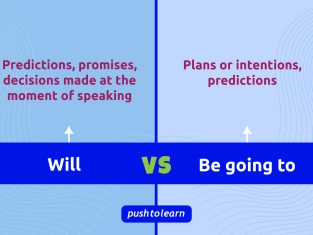
Décisions spontanées. Décisions prises au moment où l’on parle.
-
I’ll take this dress.
-
We’ll go there right now!
-
I’ll paint this table.
Expressions de temps avec le Future Simple
tomorrow
the day after tomorrow
tonight
soon / later / as soon as …
next week / next month / next year
in two days / in a week / in three years