by PushtoLearn
Future Simple: użycie i ćwiczenia
Ćwiczenia
Formy
Czas Future Simple tworzymy za pomocą will + forma podstawowa czasownika. W starszym angielskim używano shall z I oraz we, ale dziś zazwyczaj stosujemy will dla wszystkich osób.
Zdania twierdzące (Affirmative)
Podmiot + will + czasownik
-
I will work tomorrow.
-
She will travel next week.
-
They will find the key tomorrow.
Forma skrócona: I’ll, you’ll, he’ll, itd.
Przeczenia (Negative)
Podmiot + will not (won’t) + czasownik
-
I will not go for a walk tomorrow. - I won’t go for a walk tomorrow.
-
He won’t buy this ring.
-
We won’t be late.
Pytania (Questions)
Will + podmiot + czasownik … ?
-
Will I go for a walk tomorrow?
-
Will my husband buy this ring?
-
Will we find the key tomorrow?
Pytania z zaimkiem pytającym (Wh- questions):
-
Where will I go tomorrow?
-
What will he buy?
-
When will we meet?
Zastosowanie czasu Future Simple
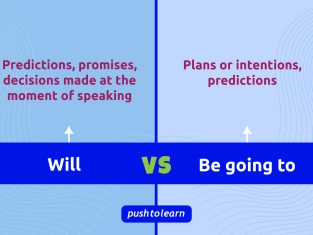
Ogólne czynności w przyszłości. Do opisywania czynności, które wydarzą się jednorazowo, wielokrotnie lub w określonej kolejności.
-
He will come here tomorrow.
-
They will go to the cinema, buy snacks, and watch a movie.
Przewidywania i przypuszczenia. Gdy mówimy, co myślimy, w co wierzymy lub czego się spodziewamy.
-
I think he will win the competition.
-
I’m afraid she won’t come on time.
-
Probably they will find a solution.
Obietnice, nadzieje i groźby
-
I promise I will help you tomorrow.
-
We hope he will enter the university.
-
She swears she will be home in time.
Fakty przyszłe (rzeczy, których nie możemy zmienić)
-
The sun will rise at 6 a.m.
-
The storm will start tomorrow.
-
Spring will come soon.
Spontaniczne decyzje. Decyzje podejmowane w momencie mówienia.
-
I’ll take this dress.
-
We’ll go there right now!
-
I’ll paint this table.
Określenia czasu z Future Simple
tomorrow
the day after tomorrow
tonight
soon / later / as soon as …
next week / next month / next year
in two days / in a week / in three years