by PushtoLearn
Voornaamwoorden in het Engels – lijst
Inhoudsopgave
Oefeningen
Soorten voornaamwoorden in het Engels
Persoonlijke voornaamwoorden (Personal Pronouns)
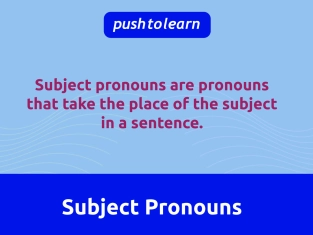
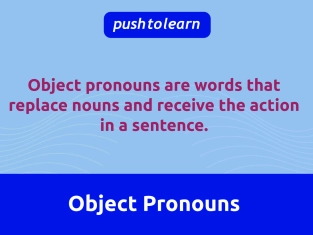
Deze voornaamwoorden vervangen direct personen of dingen.
-
I, you, he, she, it, we, they (subjects)
-
me, him, her, us, them (objects)
Examples:
-
I enjoy reading.
-
He is my cousin.
-
We met them at the museum.
Bezittelijke voornaamwoorden (Possessive Pronouns)
Geven bezit of eigendom aan.
-
my, your, his, her, its, our, their (before nouns)
-
mine, yours, his, hers, ours, theirs (stand alone)
Examples:
-
This is my jacket.
-
That blue car is theirs.
Aanwijzende voornaamwoorden (Demonstrative Pronouns)
Verwijzen naar specifieke dingen.
this, that, these, those
Examples:
-
This is my desk.
-
Those are old photographs.
Vragende voornaamwoorden (Interrogative Pronouns)
Worden gebruikt om vragen te stellen.
who, whom, whose, what, which
Examples:
-
Who is your teacher?
-
Which book do you prefer?
Betrekkelijke voornaamwoorden (Relative Pronouns)
Verbinden zinnen (extra informatie in een zin).
who, whom, whose, which, that
Examples:
The woman who called you is outside.
This is the key that opens the door.
Onbepaalde voornaamwoorden (Indefinite Pronouns)
Verwijzen op een algemene manier naar mensen of dingen (niet specifiek).
someone, anyone, everyone, nobody, each, all, some, none, anything
Examples:
Someone left a message for you.
I don’t have any milk.
Wederkerige voornaamwoorden (Reciprocal Pronouns)
Geven een wederzijdse handeling of relatie aan.
each other, one another
Example:
The two friends wrote letters to each other.
Intensieve voornaamwoorden (Intensive Pronouns)
Worden gebruikt om nadruk te leggen (dezelfde vormen als wederkerende voornaamwoorden).
myself, yourself, himself, herself, itself, ourselves, themselves
Example:
The director signed the letter himself.
Wederkerende voornaamwoorden (Reflexive Pronouns)
Verwijzen terug naar het onderwerp van de zin.
myself, yourself, himself, herself, itself, ourselves, themselves
Examples:
She prepared the presentation herself.
Be careful, you might hurt yourself.
Veelvoorkomende fouten met voornaamwoorden
Incorrect: Me like chocolate.
Correct: I like chocolate.
Incorrect: Her is very nice.
Correct: She is very nice.
Incorrect: The dog wagged it’s tail.
Correct: The dog wagged its tail.
Snelle overzichtstabel van voornaamwoorden
|
Type |
Examples |
Sentence Example |
|
Personal |
I, you, he, she, we, they |
They are in the garden. |
|
Possessive |
my, mine, yours, theirs |
That notebook is mine. |
|
Demonstrative |
this, that, these, those |
These are my new shoes. |
|
Interrogative |
who, what, which, whose |
Whose bag is on the table? |
|
Relative |
who, which, that, whose |
This is the student who won the prize. |
|
Indefinite |
some, any, nobody, all |
Nobody was in the library. |
|
Reciprocal |
each other, one another |
The players congratulated each other. |
|
Reflexive |
myself, herself, ourselves |
He introduced himself politely. |
|
Intensive |
myself, himself, themselves |
She solved the problem herself. |