by PushtoLearn
Pronomen im Englischen – Liste und Übungen
Inhaltsverzeichnis
Übungen
Arten von Pronomen im Englischen
Personalpronomen (Personal Pronouns)
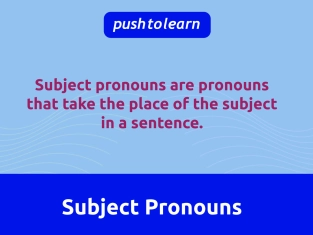
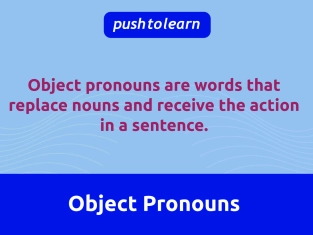
Diese Pronomen ersetzen Personen oder Dinge direkt.
-
I, you, he, she, it, we, they (subjects)
-
me, him, her, us, them (objects)
Beispiele:
-
I enjoy reading.
-
He is my cousin.
-
We met them at the museum.
Possessivpronomen (Possessive Pronouns)
Zeigen Besitz oder Zugehörigkeit an.
-
my, your, his, her, its, our, their (before nouns)
-
mine, yours, his, hers, ours, theirs (stand alone)
Beispiele:
-
This is my jacket.
-
That blue car is theirs.
Demonstrativpronomen (Demonstrative Pronouns)
Verweisen auf bestimmte Dinge.
this, that, these, those
Beispiele:
-
This is my desk.
-
Those are old photographs.
Interrogativpronomen (Interrogative Pronouns)
Werden verwendet, um Fragen zu stellen.
who, whom, whose, what, which
Beispiele:
-
Who is your teacher?
-
Which book do you prefer?
Relativpronomen (Relative Pronouns)
Verbinden Satzteile (zusätzliche Informationen in einem Satz).
who, whom, whose, which, that
Beispiele:
-
The woman who called you is outside.
-
This is the key that opens the door.
Indefinitpronomen (Indefinite Pronouns)
Beziehen sich allgemein auf Personen oder Dinge (nicht konkret).
someone, anyone, everyone, nobody, each, all, some, none, anything
Beispiele:
-
Someone left a message for you.
-
I don’t have any milk.
Reziproke Pronomen (Reciprocal Pronouns)
Zeigen eine gegenseitige Handlung oder Beziehung.
each other, one another
Beispiel:
The two friends wrote letters to each other.
Intensivpronomen (Intensive Pronouns)
Werden zur Betonung verwendet (gleiche Formen wie Reflexivpronomen).
myself, yourself, himself, herself, itself, ourselves, themselves
Beispiel:
The director signed the letter himself.
Reflexivpronomen (Reflexive Pronouns)
Beziehen sich auf das Subjekt des Satzes zurück.
myself, yourself, himself, herself, itself, ourselves, themselves
Beispiele:
- She prepared the presentation herself.
- Be careful, you might hurt yourself.
Häufige Pronomenfehler
Incorrect: Me like chocolate.
Correct: I like chocolate.
Incorrect: Her is very nice.
Correct: She is very nice.
Incorrect: The dog wagged it’s tail.
Correct: The dog wagged its tail.
Schnelle Pronomen-Übersicht
|
Typ |
Beispiele |
Beispielsatz |
|
Personal |
I, you, he, she, we, they |
They are in the garden. |
|
Possessiv |
my, mine, yours, theirs |
That notebook is mine. |
|
Demonstrativ |
this, that, these, those |
These are my new shoes. |
|
Interrogativ |
who, what, which, whose |
Whose bag is on the table? |
|
Relativ |
who, which, that, whose |
This is the student who won the prize. |
|
Indefinit |
some, any, nobody, all |
Nobody was in the library. |
|
Reziprok |
each other, one another |
The players congratulated each other. |
|
Reflexiv |
myself, herself, ourselves |
He introduced himself politely. |
|
Intensiv |
myself, himself, themselves |
She solved the problem herself. |