by PushtoLearn
Present Continuous w języku angielskim: użycie i ćwiczenia
Ćwiczenia
Struktura
Tworzymy Present Continuous za pomocą be (am/is/are) + czasownik + -ing.
I – am
He / She / It – is
We / You / They – are
Twierdzenie
I am reading a book now.
She is cooking dinner.
They are playing football.
Przeczenie
I’m not watching TV.
He isn’t listening to music.
We aren’t studying today.
Pytania
Am I speaking clearly?
Is she writing an email?
Are they waiting for the bus?
Pytania z wyrazami pytającymi (Wh- questions):
What are you doing?
Where is he going?
Why are they shouting?
Zasady pisowni dla -ing
Większość czasowników: work – working, play → playing
Czasowniki zakończone na -e: make – making, write → writing
Krótka samogłoska + spółgłoska: run – running, swim → swimming
Czasowniki zakończone na -ie: die → dying, lie – lying
Kiedy używamy Present Continuous?
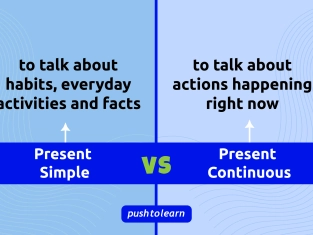
Czynności dziejące się teraz
Coś trwa w momencie mówienia.
He’s playing the guitar right now.
I’m talking on the phone at the moment.
They’re walking to school now.
Czynności wokół teraźniejszości (tymczasowe)
Nie dokładnie w tej chwili, ale w tym okresie czasu.
She’s studying for exams these days.
My brother is looking for a new job.
I’m reading a very interesting novel this week.
Plany na przyszłość (bliska przyszłość)
Z określeniem czasu przyszłego (tonight, tomorrow, next week).
We’re having dinner with friends tonight.
They’re flying to Paris tomorrow.
I’m visiting my grandparents next Sunday.
Zmieniające się sytuacje
Rzeczy, które się rozwijają lub posuwają naprzód.
The weather is getting colder.
More people are learning English online.
This city is growing very quickly.
Irytujące nawyki (z always/constantly)
Aby pokazać irytację lub złość z powodu powtarzających się czynności.
You’re always leaving your shoes in the hall!
He’s constantly forgetting his homework.
She’s always talking when I’m trying to read.
Określenia czasu z Present Continuous
now
right now
at the moment
currently
today / this morning / this evening
these days
nowadays
Przykłady:
I’m working from home today.
She’s currently learning Spanish.
They’re having lunch right now.